Training notes for people who are new to air freight. Aircraft types, what they can carry, and where the limits are.
Introduction: how aircraft carry cargo
Aircraft are designed to carry either passengers or cargo. Passenger aircraft are intended for passengers and their baggage. When space remains in the belly, and in most cases there is space, commercial cargo is loaded as well.
Two decks
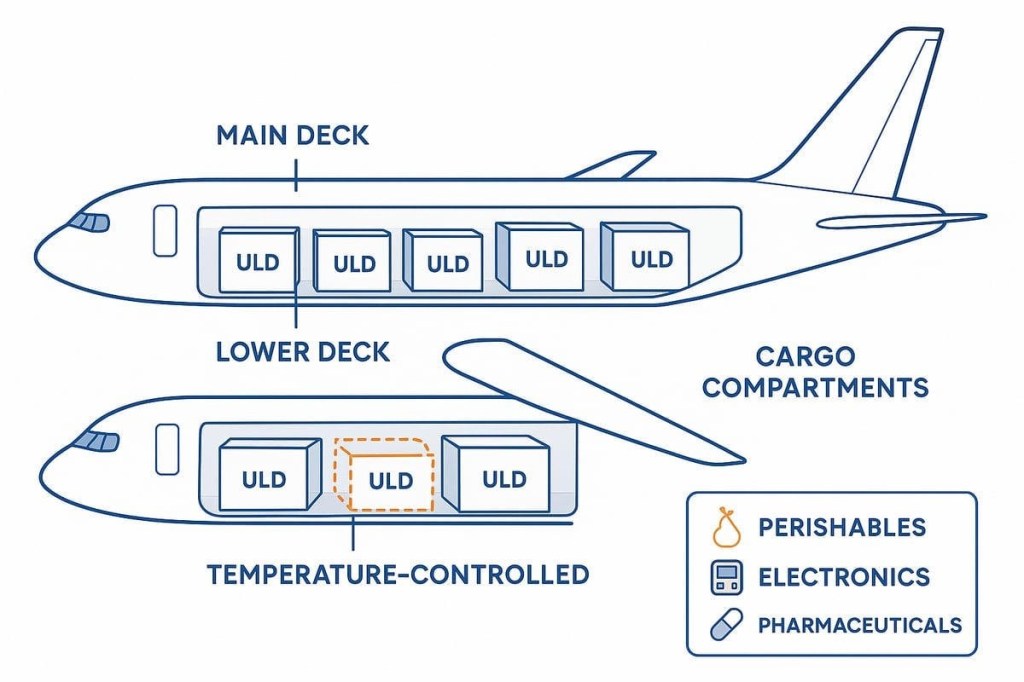
An aircraft usually has two decks: the main deck, and the lower deck, known as the belly. On a passenger aircraft the main deck is occupied by passengers, seats and the equipment that serves them. The lower deck holds passenger baggage and commercial cargo when space is available.
How cargo is loaded
On smaller narrow-body aircraft, cargo is loaded and unloaded manually or by conveyor belt, directly into the belly.
On larger wide-body aircraft, cargo is packed into special containers called ULDs. These containers are placed on pallets and loaded into the lower deck. Size limits come mainly from the dimensions of the containers and the packaging.
On a freighter there are no passengers, so both the lower deck and the main deck can be used. Cargo limits are determined mainly by pallet size, the aircraft body structure, and the size of the cargo door. Some aircraft are loaded from the side, others through the nose.
Important: every airline operates its own fleet. Always check which aircraft is actually flying and what its specific limitations are.
1. Overview: three aircraft types
Commercial air cargo is carried on three main types of aircraft. The differences directly affect what cargo can be loaded, the dimensions and weight limits, and whether dangerous goods are permitted.
| Freighter / CAO | Wide-body PAX | Narrow-body PAX |
|---|---|---|
| Main deck + belly | Belly only | Belly only |
| Height up to 300 cm | Height up to 160 cm | Height 80 to 110 cm |
| Heavy & oversized cargo | Standard pallets | Cartons / Bulk |
| Many dangerous goods | Limited DG | Very limited DG |
Key principle: the larger and more cargo-oriented the aircraft, the more you can load. Larger pieces, heavier weights, and higher-risk dangerous goods.
2. Narrow-body passenger aircraft
Examples: Boeing 737, Airbus A320 / A321
These aircraft primarily carry passengers. Commercial cargo sits in the belly, together with passenger baggage.
| Parameter | Typical value |
|---|---|
| Cargo location | Belly only |
| Max height | 80 to 110 cm |
| Weight per piece | Up to about 150 kg |
| Packaging | Cartons, bags, bulk |
| Typical capacity | 1 to 6 tonnes |
What can be loaded
- Small general cargo: small electronics, garments, documents
- Small spare parts
- Medical and pharmaceutical cargo in limited quantities
- Live animals, in some cases, in dedicated compartments
Not suitable for
- Standard pallets (PMC)
- Cargo higher than 110 cm
- Heavy or oversized pieces
3. Wide-body passenger aircraft
Examples: Boeing 777, 787, 747 | Airbus A330, A350, A380
Wide-body aircraft offer more belly space. Standard pallets and ULDs can be loaded. This is the most common type for commercial cargo on passenger flights.
| Parameter | Typical value |
|---|---|
| Cargo location | Belly (lower deck) |
| Max height | 160 cm (the golden rule) |
| Weight per piece | 500 to 1,000 kg |
| Packaging | PMC / PAG pallets, LD3 / LD6 containers |
| Typical capacity | 10 to 25 tonnes |
Golden rule: any cargo higher than 160 cm must go on a freighter.
4. Freighter, Cargo Aircraft Only (CAO)
Examples: Boeing 747F, 777F, 737F | Airbus A330F
Dedicated cargo aircraft, or converted freighters. No passengers, crew only. Both the main deck and the belly are available, so capacity and dimensions are much larger.
| Parameter | Typical value |
|---|---|
| Cargo location | Main deck + belly |
| Max height | 240 to 300 cm |
| Weight per piece | Up to 5,000 kg and more |
| Capacity | Tens up to about 140 tonnes (747F) |
| Doors | Large side doors / nose loader |
Especially suitable for
- Oversized cargo
- Machinery, industrial equipment, vehicles
- Very heavy cargo
- Large quantities of dangerous goods
- Cargo not permitted on passenger aircraft
5. Quick comparison table
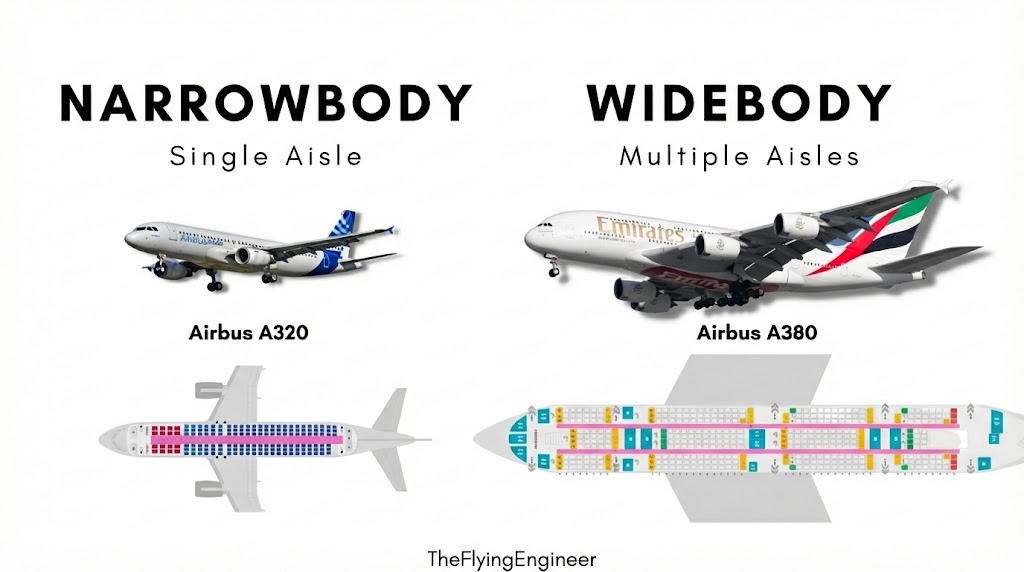
| Criterion | Narrow-body | Wide-body | Freighter |
|---|---|---|---|
| Max height | 80 to 110 cm | 160 cm | 240 to 300 cm |
| Oversized cargo | No | Limited | Yes |
| Heavy cargo | Very limited | Medium | Yes |
| Dangerous goods | Very limited | Limited | Much more flexible |
| Flight frequency | Very high | High | Lower |
| Cost | Relatively low | Medium | Higher |
| Route availability | High | High | More limited |
Rule of thumb for selection
- Regular small to medium cargo: wide-body, cheaper and more available
- Height over 160 cm: freighter, mandatory
- Dangerous goods, heavy or oversized: freighter
6. Dangerous Goods (DG)
Rules are set by the IATA Dangerous Goods Regulations (DGR). Not every substance allowed by air is allowed on a passenger aircraft.
| Aircraft type | What is allowed | Notes |
|---|---|---|
| Passenger (PAX) | Only lower-risk DG and limited quantities | Passenger columns in the DGR |
| Freighter (CAO) | More substances and larger quantities | CAO label mandatory on the package |
CAO label, Cargo Aircraft Only
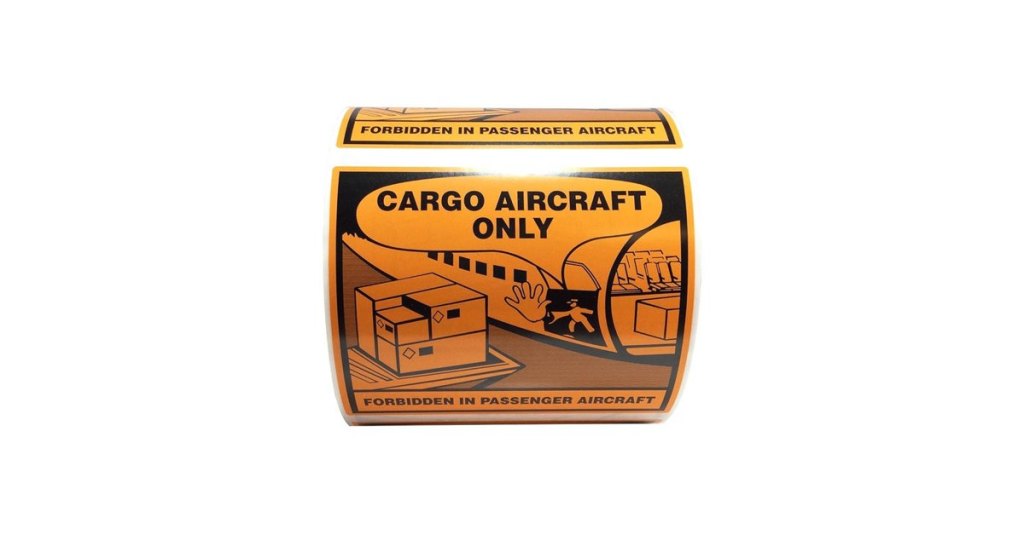
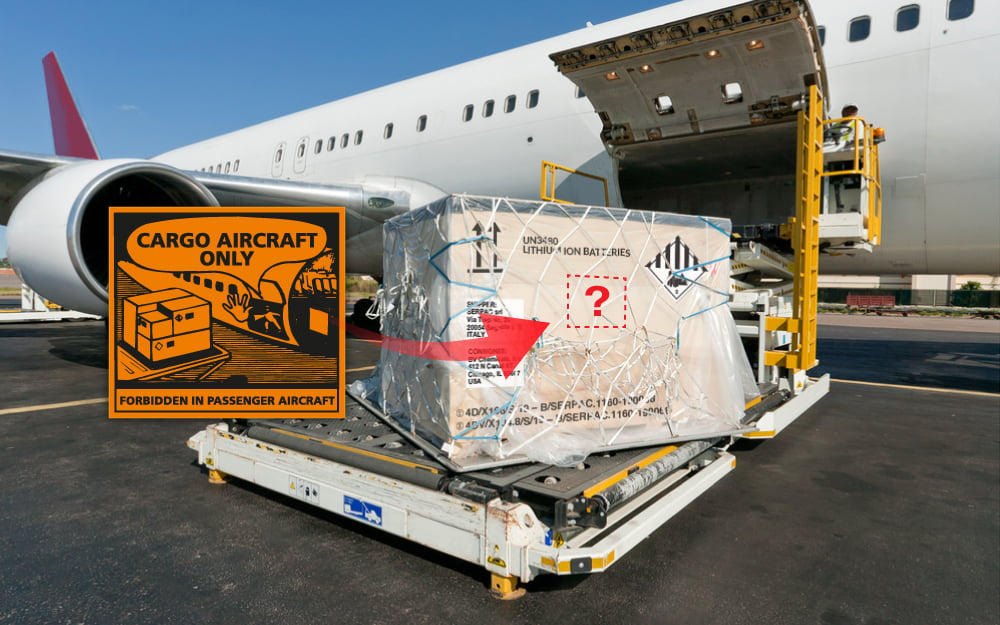
If the package carries an orange “Cargo Aircraft Only” label, it is forbidden on passenger aircraft. The shipment must fly on a freighter only.
Examples of goods that usually require CAO
- Certain explosives
- Toxic gases
- Flammable liquids in larger quantities
- Certain lithium batteries (UN3090 / UN3480) in specific quantities and types
- Higher-level radioactive materials
7. Practical daily working rules
Before confirming a quote or booking, always check
- Cargo height. Over 160 cm? Freighter only.
- Weight per piece. Very heavy? Check floor and door capability of the aircraft.
- Dangerous goods. Any DG? Check the DGR, whether PAX or CAO.
- Out-of-gauge dimensions. Too long or wide? May need a freighter or special packing.
- Temperature. Needs cooling? Confirm temperature-controlled compartment availability.
- Route availability. Freighters are not available on every route. Check frequency.
Important tips
- Always ask the customer for exact contents, especially batteries, liquids and gases
- Even oil residues in machinery can turn the shipment into DG
- When in doubt, consult a dangerous goods specialist
- Correct documentation (DGD) is critical. Errors cause delays and fines
Summary: what to remember
- Narrow-body: small cargo only, height up to about 110 cm, almost no pallets
- Wide-body: the most common option for commercial cargo on passenger flights, max height 160 cm
- Freighter: for large, heavy, oversized cargo and many dangerous goods
- 160 cm: the most important limit. Above it, freighter only
- CAO: orange label means forbidden on passenger aircraft
- DG: always check the IATA DGR before confirmation
This material is based on IATA guidelines and industry best practice. Always verify the latest regulations and the specific limitations of the airline you are booking.
 Ofer Notes
Leave a comment